
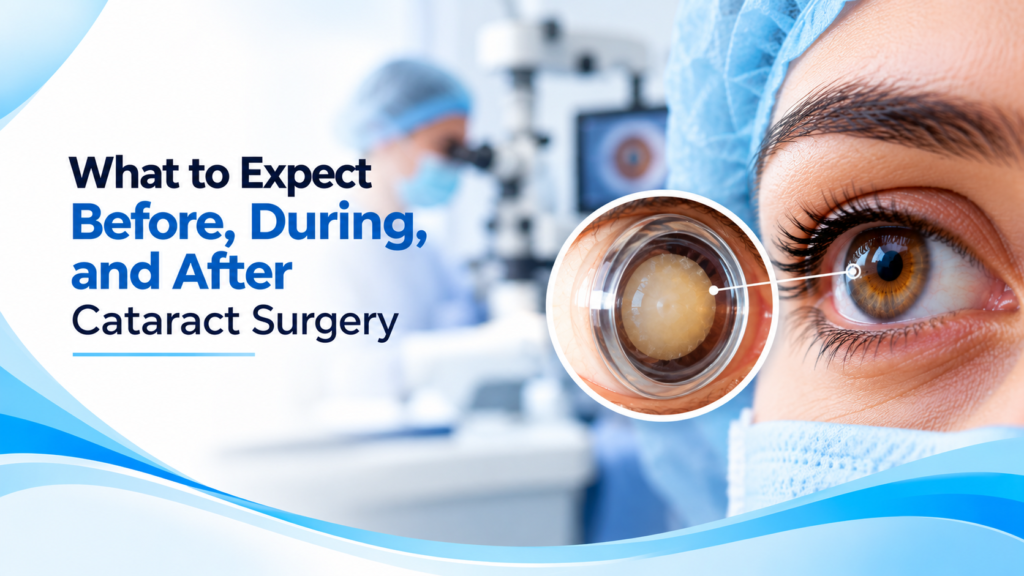
Cataracts are a common eye condition in which the natural lens of the eye becomes cloudy, causing blurred vision, glare, difficulty seeing at night, and problems with everyday activities. Cataract surgery is a commonly performed procedure that removes the cloudy lens and replaces it with an artificial intraocular lens (IOL) to help improve vision.
If you are considering cataract surgery, understanding the preparation, procedure, and recovery process can help you feel more confident. At Aligarh Eye Clinic, patients can consult an eye specialist to understand their cataract condition and available treatment options.
What Happens Before Cataract Surgery?
Before cataract surgery, an eye doctor evaluates your eye health, vision, and medical history to determine whether surgery is appropriate.
1. Comprehensive Eye Examination
Your ophthalmologist checks your vision and examines the eyes to assess the cataract and identify other conditions that may affect your treatment or visual outcome.
The examination may include:
- Visual acuity testing
- Slit-lamp examination
- Eye pressure measurement
- Retina examination, when appropriate
- Assessment of other existing eye conditions
These tests help the eye doctor plan suitable treatment based on your individual needs.
2. Intraocular Lens (IOL) Measurement
Before surgery, measurements of your eye are taken to help select the appropriate artificial lens, known as an intraocular lens (IOL). The lens power and type depend on factors such as your eye measurements, visual needs, and medical history.
Your doctor can explain the available lens options and discuss whether you may still need glasses for certain activities after surgery.
3. Medical History and Medication Review
Tell your eye doctor about any medical conditions, including diabetes and high blood pressure, as well as all medicines and supplements you take. Do not stop prescribed medicines unless your healthcare professional instructs you to do so.
You will receive instructions about eating, drinking, eye drops, and other preparations according to the planned procedure and anaesthesia.
4. Preparing for Surgery Day
Before your appointment:
- Follow the clinic’s instructions about medicines and eye drops.
- Arrange transportation home, as you may not be able to drive immediately after surgery.
- Bring your current medicines or a list of them.
- Follow the specific instructions provided by your surgical team.
Proper preparation helps the surgical team plan your care safely.
What Happens During Cataract Surgery?
Cataract surgery is generally performed as a day-care procedure, meaning most patients can return home on the same day. The exact technique depends on the cataract and the surgeon’s assessment.
Step 1: Preparing the Eye
The surgical team prepares the eye and usually uses anaesthetic eye drops or another appropriate form of anaesthesia to reduce discomfort. You may remain awake during the procedure.
Step 2: Removing the Cloudy Lens
One commonly used technique is phacoemulsification, also called phaco surgery. The surgeon makes a small incision and uses ultrasound energy to break up the cloudy natural lens before removing it.
The technique selected depends on the patient’s eye condition and the surgeon’s clinical judgement.
Step 3: Inserting the Artificial Lens
After removing the cloudy lens, the surgeon places an artificial intraocular lens (IOL) inside the eye. This lens helps focus light onto the retina.
Different IOL options may be available. Your eye doctor will explain which options are appropriate for your eye measurements and visual requirements.
Step 4: Completing the Procedure
The surgeon checks the eye at the end of the procedure. Many small incisions do not require stitches, although this depends on the surgical circumstances.
The procedure itself is often relatively short, but the total time at the clinic includes preparation and post-operative monitoring.
What to Expect After Cataract Surgery?
Recovery varies from person to person. Many patients notice improved vision within the first few days, but complete healing and visual stabilization can take several weeks.
1. Immediately After Surgery
You may experience mild irritation, watering, light sensitivity, or temporarily blurred vision. Some patients may be asked to wear an eye shield to protect the operated eye.
Follow the discharge instructions provided by your eye care team before leaving the clinic.
2. Using Prescribed Eye Drops
Your doctor may prescribe eye drops to help prevent infection and control inflammation.
For safe recovery:
- Use the prescribed drops exactly as directed.
- Wash your hands before applying eye drops.
- Avoid touching the dropper tip to your eye or other surfaces.
- Do not stop or change your medication without medical advice.
3. Protecting Your Eye During Recovery
Your surgeon will provide specific instructions, but common precautions may include:
- Avoid rubbing or pressing on the operated eye.
- Avoid getting unclean water or soap into the eye.
- Avoid swimming until your surgeon says it is safe.
- Avoid strenuous activity or heavy lifting for the period advised.
- Use an eye shield if recommended.
- Attend all scheduled follow-up appointments.
Your doctor will advise when you can resume driving, work, exercise, and other normal activities.
4. Follow-Up Eye Examinations
Follow-up appointments allow your ophthalmologist to check healing, assess vision, and identify complications early. Attend these appointments even if your vision seems to be improving.
Seek urgent medical attention if you develop severe or increasing eye pain, sudden worsening of vision, marked redness, increasing light sensitivity, or new flashes and floaters.
Benefits of Cataract Surgery
When cataracts significantly affect vision, surgery may help patients:
- See more clearly
- Experience less cataract-related glare
- Improve their ability to perform everyday activities
- Read or recognise objects more comfortably, depending on the outcome
- Improve their overall visual function
The results vary according to eye health, other medical conditions, the type of lens implanted, and the healing process. Cataract surgery cannot correct every cause of reduced vision.
Is Cataract Surgery Safe?
Cataract surgery is a commonly performed procedure and is generally considered safe when appropriately planned and performed. However, like any surgery, it carries risks.
Possible complications include infection, inflammation, bleeding, changes in eye pressure, retinal problems, or other vision-related complications. Your individual risk depends on your eye health and medical history.
Discuss the potential benefits, risks, lens choices, and recovery expectations with your ophthalmologist before making a decision.
When Should You Consult an Eye Doctor in Aligarh?
Consider visiting an eye specialist if you experience persistent blurred vision, difficulty reading, glare from headlights, faded colours, or problems with daily activities.
An eye examination can determine whether cataracts are responsible for your symptoms or whether another eye condition requires attention. Surgery is generally considered when cataracts interfere with daily life and the expected benefits outweigh the risks.
If you are looking for cataract evaluation or treatment, Aligarh Eye Clinic offers eye care services in Aligarh. Consult an ophthalmologist to discuss your symptoms and suitable treatment options.
Frequently Asked Questions
1. How long does cataract surgery take?
The surgical procedure often takes around 10–30 minutes, depending on the complexity of the case. Preparation, monitoring, and recovery at the clinic take additional time.
2. Is cataract surgery painful?
Most patients experience little discomfort because anaesthesia is used. You may feel mild pressure or notice lights during the procedure. Tell your surgical team if you experience significant discomfort.
3. How long does it take to recover from cataract surgery?
Many patients notice better vision within a few days, but recovery varies. Vision may continue to stabilize over several weeks. Follow your surgeon’s advice and attend follow-up visits.
4. Can cataracts return after surgery?
The removed cloudy natural lens does not grow back. However, the capsule supporting the artificial lens may become cloudy later, a condition called posterior capsule opacification (PCO). It can often be treated with a laser procedure if needed.
5. Will I need glasses after cataract surgery?
Some patients still need glasses for reading, distance vision, or specific activities. This depends on the type of intraocular lens implanted, the eye’s condition, and the desired visual outcome.
6. What should I avoid after cataract surgery?
Avoid rubbing the eye, swimming, strenuous activity, and other activities restricted by your surgeon until you receive clearance. Follow your prescribed eye-drop schedule and post-operative instructions.
Conclusion
Understanding what to expect before, during, and after cataract surgery can help you prepare for treatment and recovery. A thorough eye examination, appropriate lens selection, careful post-operative care, and regular follow-up appointments all play important roles in achieving the best possible visual outcome.
If you have symptoms of cataracts, consult an experienced eye doctor in Aligarh for an assessment and personalized guidance. Early evaluation can help you understand your options and decide when treatment may be appropriate.